Ee Nagaraniki Emaindi was the first movie I went to the theatre to watch after booking the tickets on my own, using my first smartphone. I watched it with my best friend, and because the film itself was about friendship, the laughter came easily. I remember walking out of the theatre and thinking to myself, man, I want to make movies like this. I was 15 years old.
It was in that same year, 2018, that I first told myself I wanted to pursue filmmaking. And without me realizing it then, Telugu cinema was also beginning to change, becoming something I had never imagined it could be.
telugu cinema was always rooted in the commercial format, largely because most experiments, at least the ones that reached the mainstream, did not succeed the way they hoped to. barring the late vishwanath garu, who somehow blended new age mainstream cinema into his own sense and style of filmmaking, there often felt like a visible gap when it came to a sustained parallel cinema movement in Telugu.
Growing up as a typical telugu boy, i was never truly aware of parallel cinema or the style of filmmaking. From where I stood, it wasn’t part of the cultural conversation in any immediate way. but in 2018, there was a unique, almost mythical mixture of contemporary commercial cinema along with new age parallel cinema.
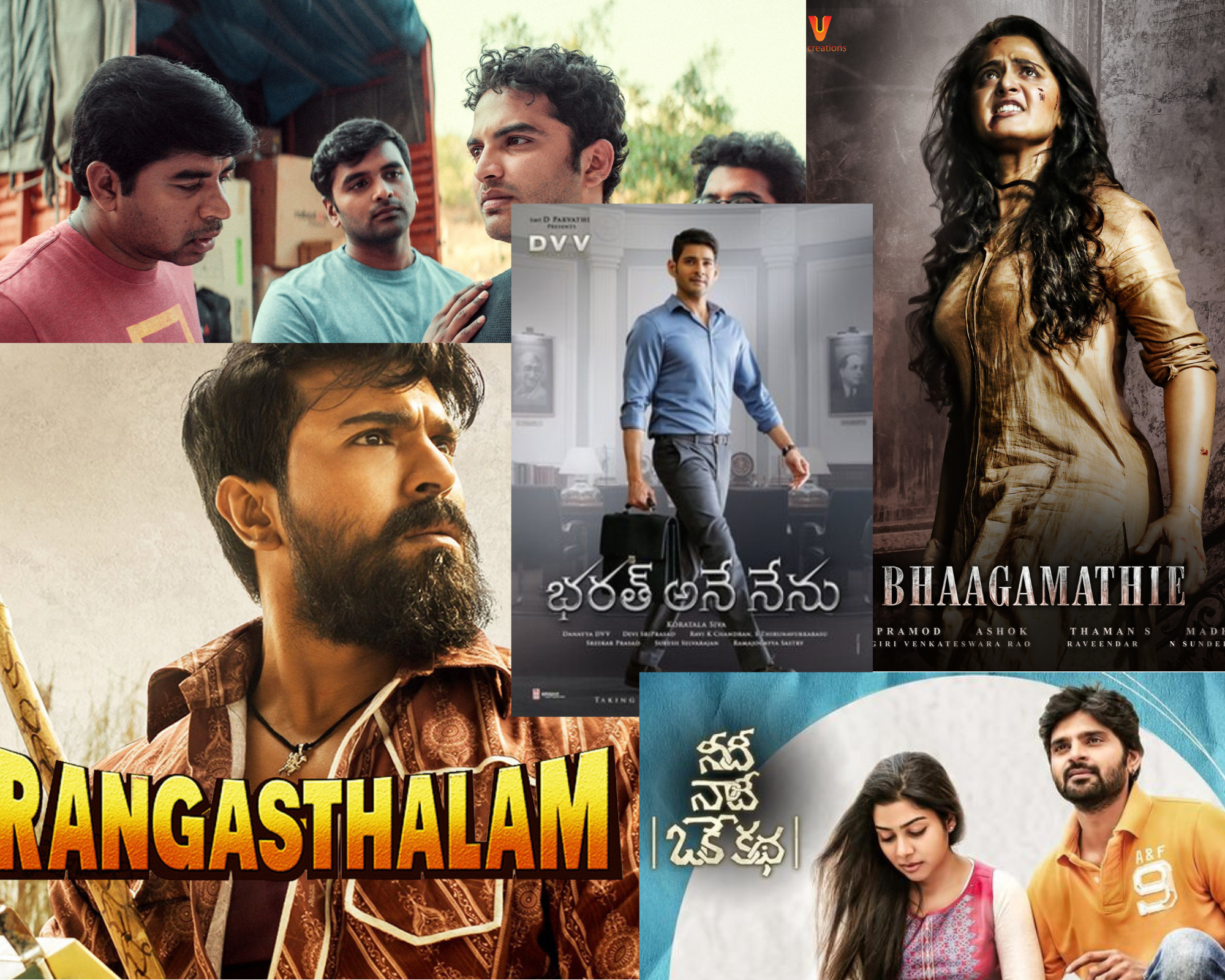
the year started with “bhagamathie”, a horror/thriller with this eerie background score by thaman, and anushka, who is on song, which sort of Set up what’s in store for the rest of the year. it was followed by a funny, almost trivikram-esque cinema like “chalo” along with an old school urban romance drama “tholi prema” and an out-and-out indie film “awe”. For me, Awe felt like one of the first clear signs that parallel, new-age voices were finding space in Telugu cinema.
and then there was one film. one film that still keeps me thinking about how much an actor’s range can really vary. to see someone like ram charan almost turn into chittibabu, and to root for him, cheer for him, and feel for him, was the first time in my adolescent years that i truly understood what acting was, after Baahubali. Rangasthalam, to me, remains one of the greatest post-modern Telugu films ever made.
but quietly, almost in the background, just a week before Rangasthalam, a young actor was breaking out with a satirical little film called “Needi Naadhi Oke Katha”.
i remember mahesh babu, at the pre-release event of Bharat Ane Nenu, showering dsp with praise for his work ethic and versatility. to think that he composed music for both Rangasthalam and Bharat Ane Nenu, films that released just fifteen days apart, speaks volumes about his craft.